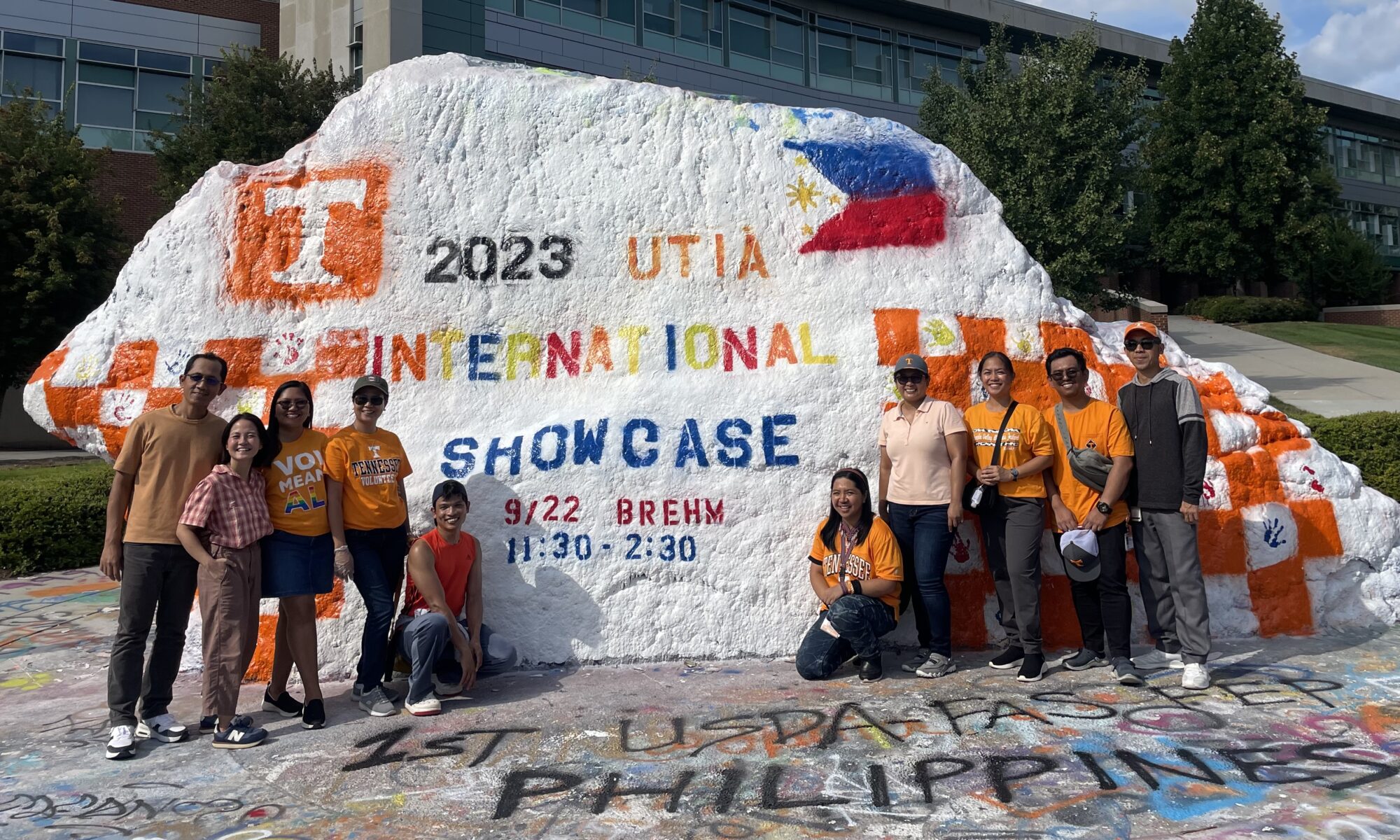
Some projects at the UT Institute of Agriculture bring the world’s cutting-edge practices to Tennessee agriculture. Others at the Smith Center bring the best Tennessee has to offer to the world. The USDA-funded Scientific Exchange and the Faculty Exchange programs do both.
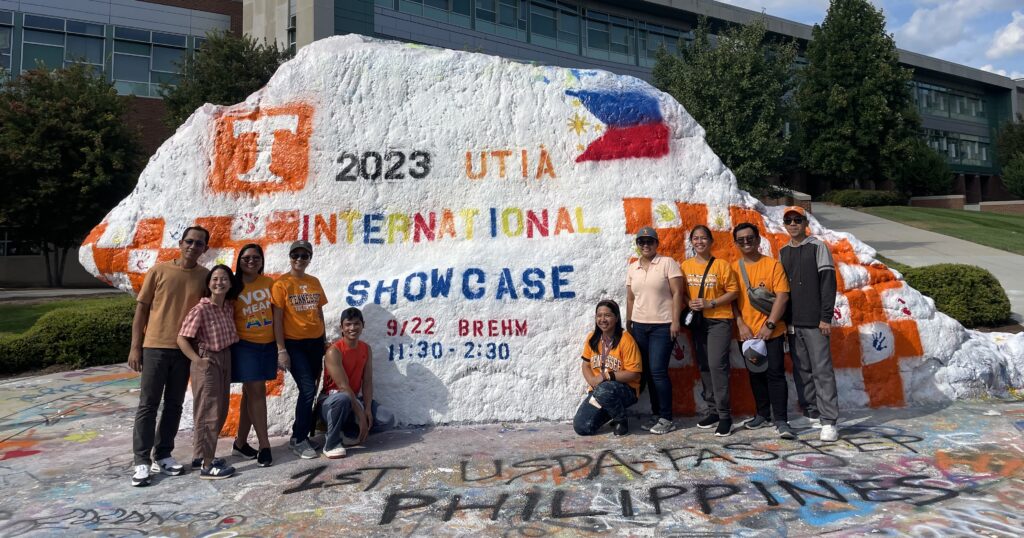
Since 2022, researchers and faculty from across the world come to UTIA to train under the mentorship of faculty in topics critical to improving agriculture and food security in their home countries. These topics have ranged from teacher training for veterinary faculty from East Africa and the Philippines to animal health governance for Kenyan scientists to, most recently, innovations in animal feed and fertilizer for scientists from across the African continent. The fellows spend a semester at UTIA and then host their faculty mentors in their home countries for a reciprocal visit.
Troy Rowan, an assistant professor of animal science, hosted a Filipino fellow under the Faculty Exchange Program (FEP). “It always strikes me how the work that we are doing here at UTIA is applicable in systems around the world,” Rowan says, considering why international engagement like this is important. “Beef production looks very different in the US than it does in Kenya, but their challenges are not so different from ours. This means that the solutions that we develop here can have impacts beyond Tennessee and the US.” And although fellows return to their home countries and institutions with newly acquired or strengthened skills, their partnerships with UTIA do not end there.
After completing her teacher training fellowship at UTIA, Ma. Cynthia Rundina- Dela Cruz, a veterinary professor and microbiologist at Cavite State University, spread what she learned throughout universities across the Philippines. She began co-hosting online seminars with the UT College of Veterinary Medicine that were attended by hundreds of Filipino faculty, sharing teaching methods she’d picked up in Tennessee.
The impacts of Ma. Rundina-Dela Cruz’s fellowship extended beyond education. She credits the FEP program for providing her both the professional connections and confidence to start ambitious new projects that improve lives across the Philippines, including:
- Potentially partnering with UTIA professor Sree Rajeev and other Filipino FEP fellows Alisha Reyes and Alan Dargantes to develop a new animal vaccine to protect against leptospirosis, a dangerous bacterial disease that can spread to humans through contact with animal urine
- Developing an Extension policy brief to guide Filipino livestock producers on the appropriate antibiotic use to prevent bacteria from adapting and becoming harder to treat
- Partnering with fellow FEP alumni Marvin Bryan Salinas and Alan Dargantes to investigate how the Philippines can manufacture the salmonella vaccine domestically instead of relying on expensive imports that most farmers can’t afford
- Potentially partnering with UTIA professor Agricola Odoi and other Filipino FEP fellows Rod Salvador and Alan Dargantes on an antimicrobial resistance survey among veterinary practitioners in the Philippines
Zahia Sebkhi, a researcher at the National Institute of Agronomic Research of Algeria, completed a Scientific Exchange Program fellowship at UTIA in summer 2024. “This fellowship has been invaluable. It has allowed me to gain knowledge and skills that I can directly implement in my country. I’ll share the new techniques with my colleagues and local producers on using microbial inoculants to improve forage quality and boost productivity. Plus, the connections made during the training will allow me to continue to exchange ideas and develop innovative solutions,” she says.
While international fellows return home with strengthened professional skills and increased confidence, they also leave behind fresh perspectives that benefit Tennessee’s agricultural community. “There are still so many things that our fellows share with us culturally and teaching methods that they use that we realize are great ideas,” says Marcy Souza, professor and associate dean of UT College of Veterinary Medicine and co-leader of several FEP cohorts. “I think there’s a lot of sharing in these programs that’s great for our faculty and our students as well.”
UTIA researchers also benefit from the collaborations kick-started through these fellowships. “It has changed how I think about the work that our lab does,” Rowan says. “As we ask questions and find solutions for Tennessee cattle producers, I have started considering what the wider impacts in the international community might be. My experiences have also allowed me to build relationships with an incredible network of scientists and producers around the world tackling similar challenges.”
Fellows from the five cohorts of the programs have returned home with new skills and knowledge. At the same time, these programs have supported reciprocal visits by UTIA faculty and staff to the fellows’ home countries and produced joint publications, additional grants, and international partnerships with prestigious institutions. All this, in addition to the impact these fellows have had on their local communities, shows why exchange programs like these are valuable.
By hosting these fellows and actively participating in exchange programs, the institute is now better equipped than ever to tackle the pressing challenges in veterinary medicine, animal health, and livestock productivity—advancing its mission to deliver Real. Life. Solutions. These collaborative efforts have propelled UTIA forward, strengthening its impact and leadership in these critical areas of study. Exchange programs like these are vital because they foster global collaboration, spark innovation, and build the cross-cultural partnerships needed to solve the challenges facing the agriculture industry internationally.
MORE FROM THIS ISSUE