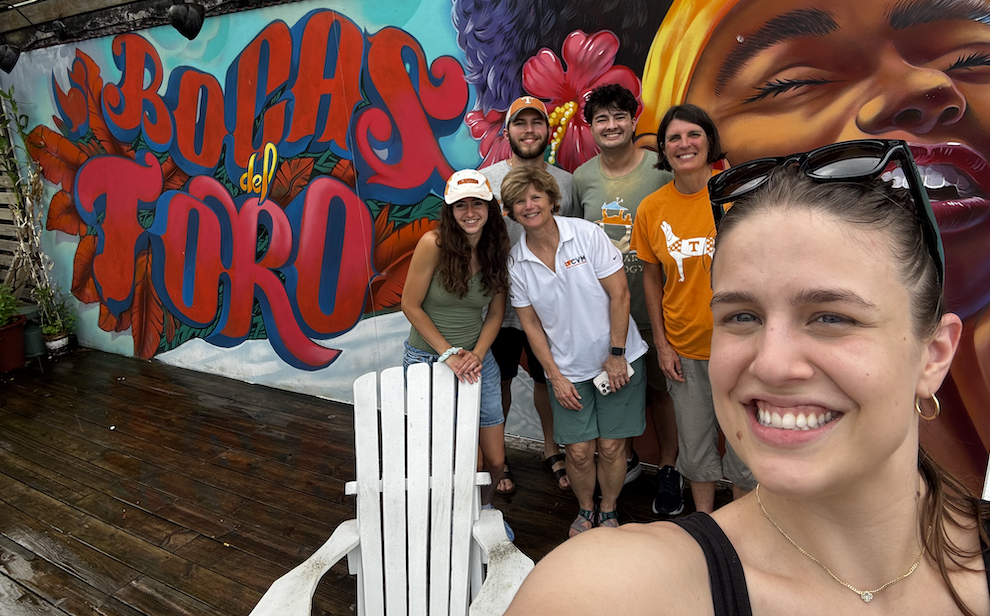
A recent trip to Panama provided four University of Tennessee College of Veterinary Medicine students with a firsthand look at the challenges of delivering care in remote communities and the impact of service on a global scale.
Second-year veterinary students Mikayil Birdal, Calliope Fisher, and Michaela Pomatto, along with third-year veterinary student Ethan Smith, traveled to Bocas del Toro Province, Panama, as part of a pilot partnership between the college and Floating Doctors, a nonprofit organization that provides medical and veterinary services to underserved communities throughout the Caribbean coast region.
Led by Marcy Souza, associate dean of outreach and global engagement, the experience was designed to expose students to global health challenges while reinforcing the connections among animal health, human health, and community well-being.
“One of the goals of this experience was to help students understand how veterinary medicine fits into a broader global context,” Souza says. “Working alongside healthcare professionals in remote communities allows students to see firsthand how access to care, public health, and animal welfare are interconnected.”
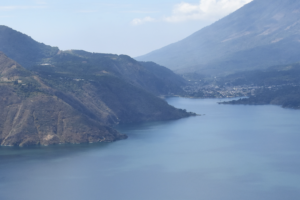
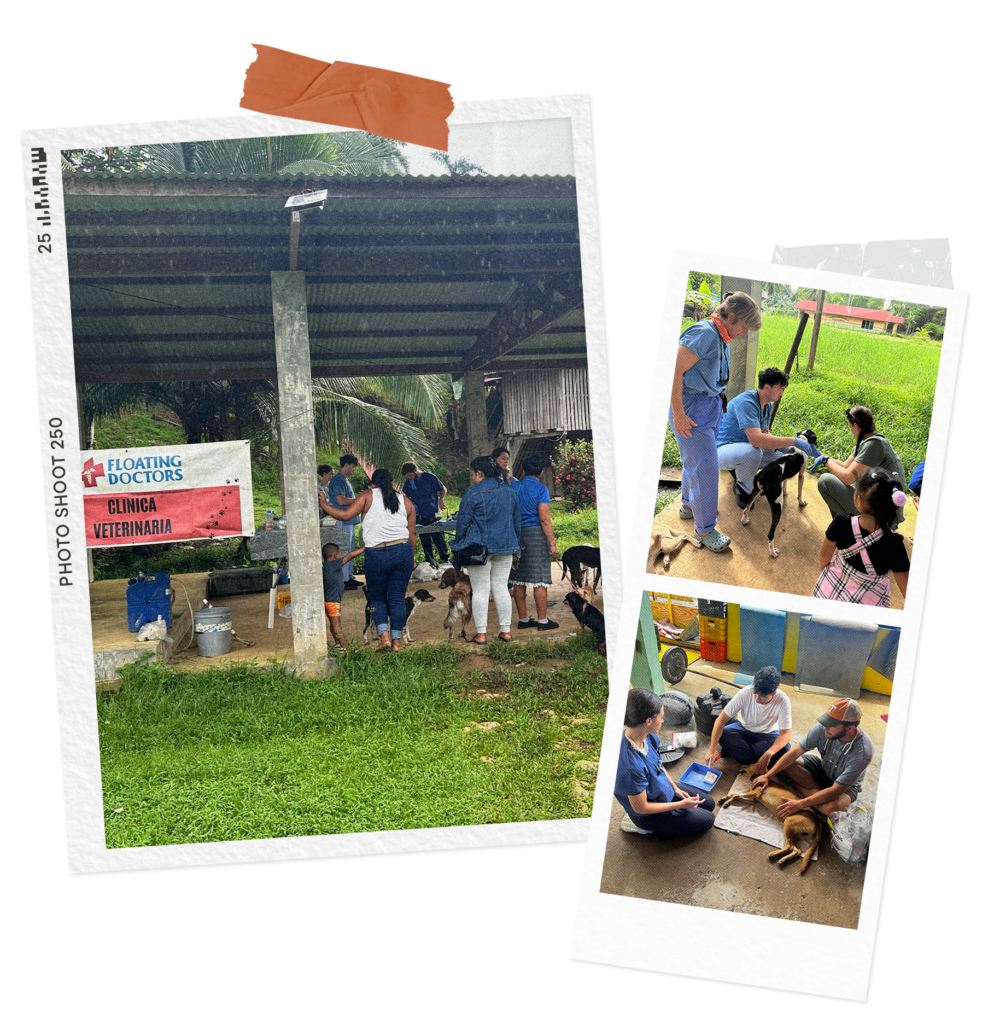
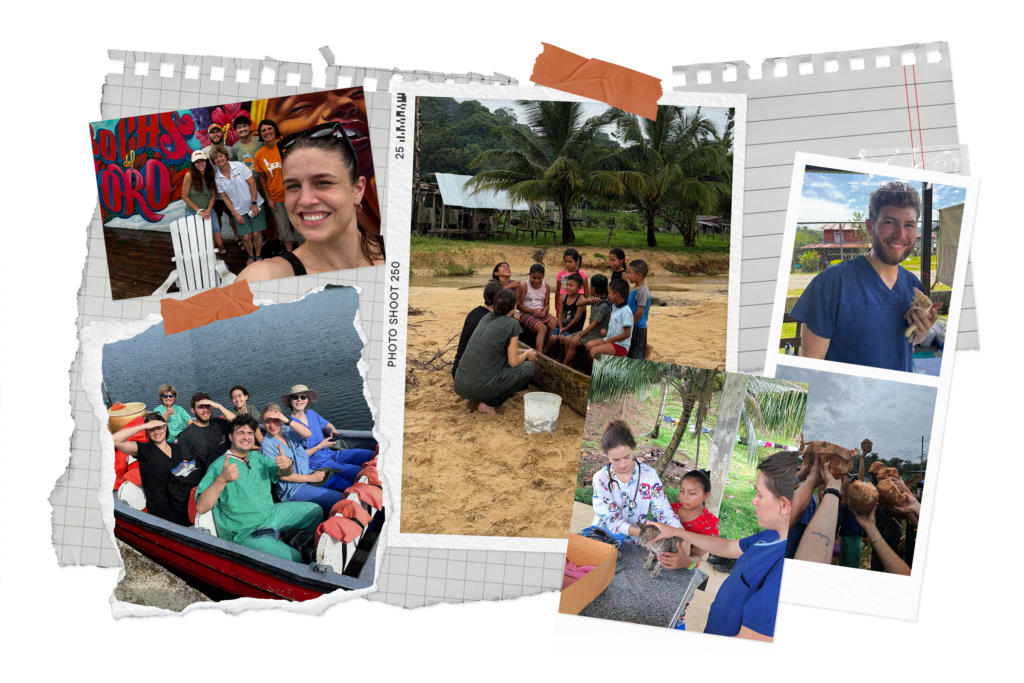
Reaching many of the communities required hours of travel by boat through the islands of Bocas del Toro. Once there, students helped provide veterinary services ranging from physical examinations and preventive care to surgical procedures.
For Birdal, who has long been interested in One Health and infectious disease, the opportunity to work alongside professionals serving both human and animal populations was particularly meaningful.
“I think it’s really cool to have people from different medical professions working in similar environments,” Birdal says. “It brings more of a One Health perspective to all the parties involved.”
For Fisher, the experience was an opportunity to combine her passion for service with her bilingual skills.
“When I first learned about this opportunity, I knew I wanted to participate because I am bilingual and hoped to use that skill in a veterinary setting to serve those who need it most,” she says.
For Smith, who had never traveled outside the United States before, the trip offered an opportunity to experience a new culture while learning alongside healthcare professionals from around the world.
“The opportunity to work with a variety of medical professionals from all over the world seemed like an excellent opportunity to broaden my horizons and gain a new perspective,” Smith says.
The realities of working in remote communities quickly became apparent. Students traveled to isolated islands and mountainous jungle regions, often adapting to limited resources and unfamiliar living conditions.
“The most challenging part of the experience for me was traveling to remote communities and adapting to new living conditions,” Fisher says. “Although the experience was at times uncomfortable, it gave me a deeper appreciation for the realities these communities navigate every day and the barriers they face in accessing veterinary care.”
Smith agrees that adapting to the environment could be challenging at times.
“Between the heat, the noise, and hammocks, it was hard to fall asleep and stay asleep,” he says. “It taught me to push through uncomfortable situations and maintain a good attitude even when things aren’t going my way.”
Students learned to practice medicine in environments that looked very different from traditional veterinary clinics. Entire mobile clinics were packed into portable cases and transported from community to community. Surgeries were often performed in open-air settings, requiring creativity, flexibility, and resourcefulness.
“Our team was able to pack an entire clinic into a few portable cases and relocate as needed,” Fisher says. “Although performing surgeries in open-air settings initially surprised me, I quickly understood that adapting care to the environment was necessary to meet the needs of these communities.”
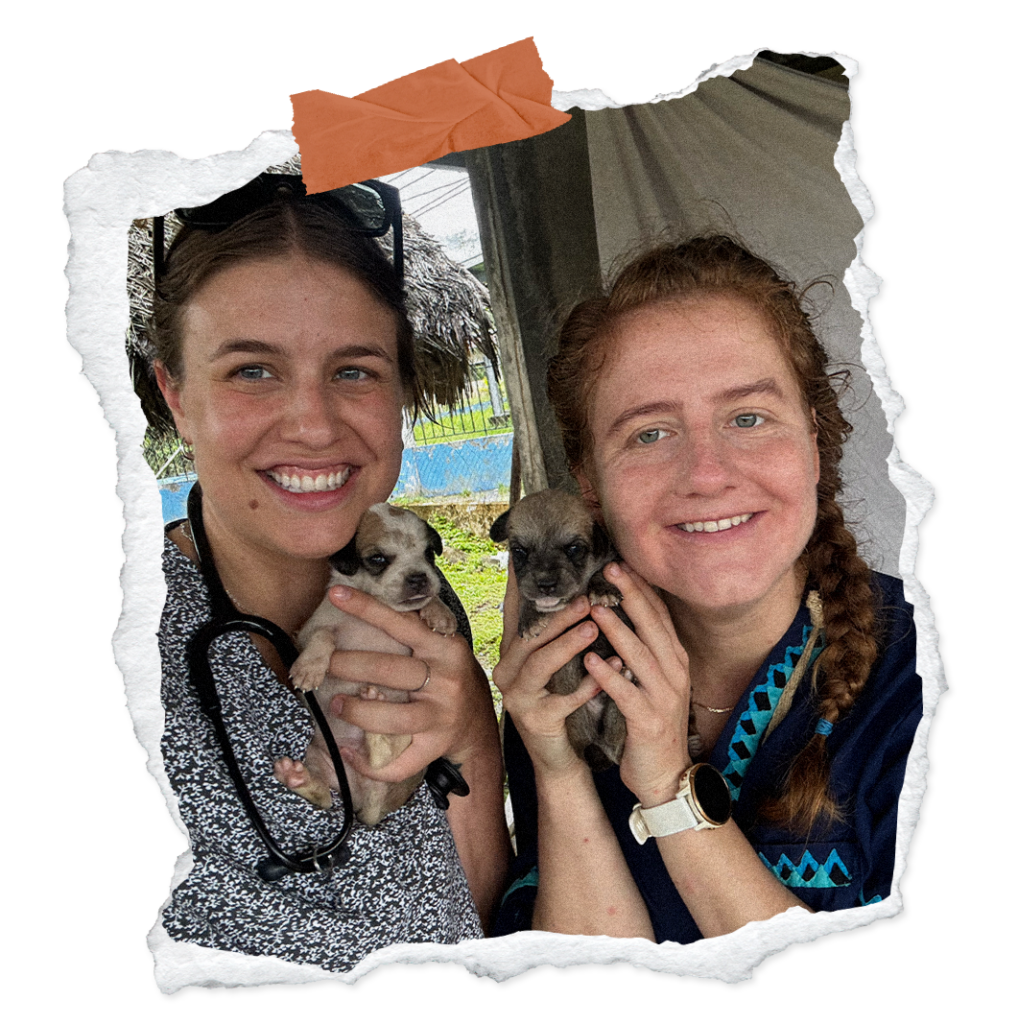
For Pomatto, the experience provided an opportunity to step outside her comfort zone and put her developing clinical skills to the test. One of her most memorable moments came while performing a feline neuter procedure under the guidance of a veterinarian from Spain.
“Though I had witnessed the procedure many times, I had never performed it from start to finish on my own,” Pomatto says. “Dr. Sonia’s unwavering confidence in my ability allowed me to silence my own doubts.”
Successfully completing the procedure reinforced the importance of mentorship and self-confidence in veterinary medicine.
“It taught me that technical skill is only half the battle; the confidence to execute it is just as vital,” she says.
The students also gained a deeper appreciation for the ingenuity required when providing care with limited resources.
“Witnessing the Floating Doctors provide what is often a community’s only access to medical care out of mobile cases was deeply humbling,” Pomatto says. “It forced me to realize that veterinary medicine is not always about perfect diagnostics; it is about maximum resourcefulness.”
Throughout the trip, students were inspired not only by the communities they served but also by the relationships they built along the way.
One of Smith’s favorite memories occurred while monitoring a dog recovering from surgery in the community of Ensenada. Curious about what he was doing, a young boy sat beside him and watched as he listened to the dog’s heartbeat through a stethoscope. Smith handed him the stethoscope and encouraged him to listen.
“A big smile came across his face as he listened,” Smith says. “He sat with me for the next thirty minutes as the dog woke up.”
Fisher recalled watching the veterinary team remain calm and compassionate despite challenging circumstances that included extreme heat, unpredictable weather, free-roaming animals, and crowds of curious observers.
“They were incredible teachers,” she says. “I believe I learned the most from the example they set.”
The experience also challenged students to reconsider what quality veterinary care can look like in different settings.
“Prior to this experience, my exposure to veterinary medicine had been limited to Tennessee,” Fisher says. “This experience challenged that perspective and taught me that meaningful, impactful care can still be provided even when the ‘gold standard’ is not possible.”
Smith said the experience also broadened his understanding of where veterinary care is needed.
“This experience opened my eyes to how universal the need for veterinary care is,” he says. “Going to these remote communities has led me to think about communities here in the US that do not have access to appropriate medical care and inspired me to seek those communities out as I become a veterinarian.”
For Souza, those lessons are among the most valuable outcomes of international experiences.
“Students learn adaptability, cultural humility, and problem-solving skills that are difficult to replicate in a traditional classroom setting,” she says. “These experiences help prepare future veterinarians to serve diverse communities wherever their careers may take them.”
As the pilot program concludes, Birdal, Fisher, Pomatto, and Smith returned to Tennessee with new clinical skills, greater confidence, and a broader understanding of veterinary medicine’s role in improving lives around the world.
For many, the experience reinforced a commitment to service that will shape their future careers.
“Ultimately, this trip solidified my desire to serve,” Pomatto says. “The adaptability I gained in Panama will directly inform my ability to protect animal health and human welfare throughout my career.”
MORE FROM THIS ISSUE